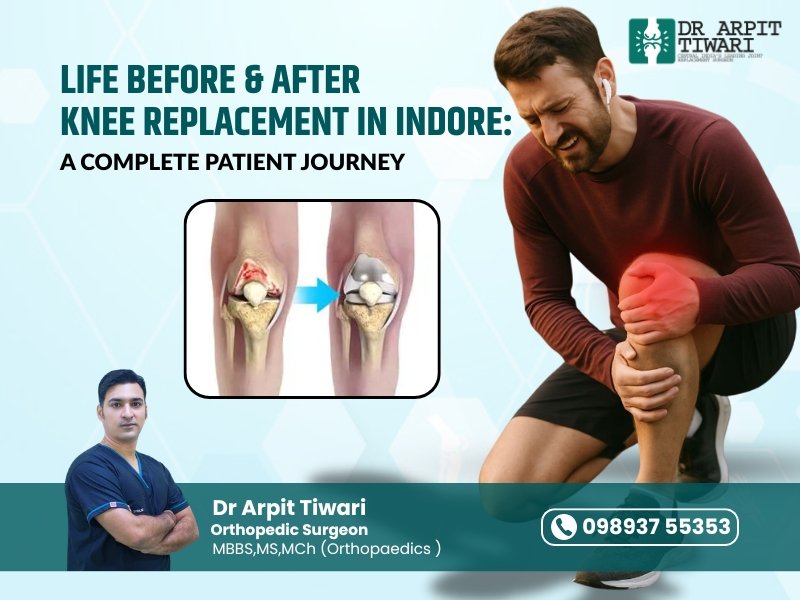
Knee pain is one of the most common joint problems, especially among older adults. However, it is no longer limited to age. Today, many middle-aged individuals also experience knee pain due to lifestyle habits, obesity, injuries, or arthritis. In the early stage, it may feel like a mild discomfort while walking or climbing stairs, so most people tend to ignore it. But gradually, the pain becomes more frequent and starts affecting daily activities like sitting, standing, walking, and even sleeping. If this condition is not treated on time, it can significantly reduce mobility and quality of life. That is why consulting the Best Knee Replacement Surgeon in Indore at the right time is important for proper diagnosis and long-term relief.
Over time, patients begin to change their lifestyle to avoid pain. They stop going for walks, avoid stairs, and depend on medicines, which slowly reduces their independence. In many cases, they start relying on others for basic daily tasks. This is where knee replacement surgery becomes a life-changing solution. With modern advancements, patients can regain mobility and live a pain-free life. Dr Arpit Tiwari, Best Orthopedic surgeon in indore, with over 15 years of experience and more than 15,000 successful surgeries, provides advanced joint replacement treatment at Jyoti Multi-Speciality Hospital. His patient-focused approach ensures safe surgery and complete recovery support, helping patients return to an active and confident lifestyle.
Life Before Knee Replacement: Understanding the Real Challenges
When Pain Becomes a Daily Problem
Knee pain usually develops slowly. At first, it may appear only after long walks or physical activity. Many patients think it is temporary and ignore it.
However, as time passes, the condition worsens. The cartilage in the knee joint starts wearing out, leading to friction between bones. This causes pain, swelling, and stiffness.
Patients commonly experience:
- Continuous pain in the knee joint, even during rest
- Stiffness, especially in the morning or after sitting for long periods
- Difficulty bending or straightening the knee
- Swelling and tenderness around the joint
- Weakness in the leg muscles
At this stage, daily comfort is already affected, but many patients still delay proper treatment.
How Daily Life Gets Affected
As knee damage increases, it starts interfering with normal routine activities.
For example, something as simple as climbing stairs becomes painful because the knee joint has to bear more pressure. Sitting down and getting up from a chair requires extra effort. Walking even short distances feels tiring and uncomfortable.
Patients often notice:
- Reduced walking capacity
- Difficulty standing for long durations
- Need for support while walking
- Avoiding outdoor activities
- Trouble performing household tasks
Because of pain, patients reduce movement. This leads to further stiffness and muscle weakness, making the problem worse.
At this stage, many people start looking for the Best Knee Replacement Surgeon in Indore to find a permanent solution.
Emotional and Mental Impact
Chronic knee pain does not only affect physical health—it also impacts emotional well-being.
Living with constant pain can lead to:
- Frustration and irritation
- Loss of independence
- Dependence on family members
- Fear of falling or injury
- Reduced confidence in movement
Many patients stop participating in social activities. They avoid outings, gatherings, and travel. Over time, this reduces overall happiness and quality of life.
This emotional burden is one of the main reasons why timely treatment is important.
When is Knee Replacement Needed?
Knee replacement is not the first option. Doctors usually recommend it when all other treatments fail to provide relief.
You may need surgery if:
- Pain persists despite medicines and physiotherapy
- Knee joint damage is visible in X-rays
- Arthritis has reached an advanced stage
- Walking becomes difficult or painful
- Daily activities are severely affected
In such cases, consulting the Best Orthopedic surgeon in indore is essential.
Early consultation helps in understanding the condition and planning the right treatment before complications increase.
Understanding Knee Replacement Surgery
What is Knee Replacement?
Knee replacement surgery is a procedure where the damaged parts of the knee joint are removed and replaced with artificial components.
The knee joint normally has a smooth cartilage surface that allows easy movement. When this cartilage is damaged, bones rub against each other, causing pain and stiffness.
During surgery:
- The damaged cartilage is removed
- The joint surface is reshaped
- Artificial implants are placed
These implants act like a natural joint, allowing smooth and pain-free movement.
The goal of the surgery is simple:
- Reduce pain
- Restore movement
- Improve quality of life
Patients treated by the Best Knee Replacement Surgeon in Indore often experience long-term relief and better mobility.
Types of Knee Replacement
Knee replacement is not the same for every patient. The type of surgery is decided after carefully evaluating the condition of the knee joint, the level of damage, and the patient’s lifestyle needs.
Total Knee Replacement (TKR)
In total knee replacement, the entire knee joint is replaced with an artificial implant. This option is usually recommended when the joint is severely damaged due to advanced arthritis or long-term wear and tear.
It is the most common procedure and provides long-term relief from pain while significantly improving mobility and joint function.
Partial Knee Replacement (PKR)
In partial knee replacement, only the damaged portion of the knee is replaced, while the healthy part of the joint is preserved. This procedure is suitable for patients whose damage is limited to a specific area of the knee.
Because less bone and tissue are involved, recovery is often faster, and the knee may feel more natural after surgery.
The final decision depends on several factors such as the extent of joint damage, the patient’s age, activity level, and overall health. A proper evaluation by an experienced orthopedic specialist helps in choosing the most suitable option.
Modern Advancements in Knee Replacement Surgery
Over the years, knee replacement surgery has become much safer, more precise, and patient-friendly. With the help of modern medical technology, the outcomes have improved significantly.
Some important advancements include:
- Minimally invasive techniques that use smaller incisions, resulting in less pain and quicker healing
- High-quality advanced implants designed to last longer and function more like a natural knee
- Enhanced recovery protocols that focus on early movement and faster rehabilitation
These improvements not only reduce discomfort after surgery but also help patients recover more smoothly and return to their normal daily activities in a shorter time.
Duration and Hospital Stay
- Surgery usually takes 1–2 hours
- Hospital stay is around 3–5 days
Patients are encouraged to start moving early for better recovery.
Life Immediately After Surgery
First Few Days: What Patients Feel
After surgery, it is normal to experience:
- Mild to moderate pain (controlled with medication)
- Swelling around the knee
- Difficulty walking initially
However, this phase is temporary and improves quickly with proper care.
Early Movement and Hospital Recovery
Doctors and physiotherapists encourage early movement because it helps in faster healing.
Patients are guided to:
- Start walking with support
- Perform basic exercises
- Move the knee gently
Early movement prevents stiffness and improves blood circulation.
Recovery Phase: Step-by-Step Healing
First 2–6 Weeks
This is the most important recovery phase.
Patients gradually notice:
- Reduction in pain and swelling
- Improvement in walking
- Better joint flexibility
- Increased confidence
Regular physiotherapy is essential during this time.
Around 3 Months
After 3 months:
- Most patients walk without support
- Pain is minimal
- Daily activities become easier
Patients feel more independent and active.
Full Recovery (3–6 Months)
Complete recovery usually takes 3 to 6 months.
By this time:
- The knee becomes stable and strong
- Movement becomes natural
- Patients return to normal lifestyle
With guidance from the Best Knee Replacement Surgeon in Indore, long-term results are very successful.
Do’s and Don’ts for Best Results
Do’s
- Follow physiotherapy regularly
- Maintain a healthy weight
- Stay active
- Follow doctor’s advice
Don’ts
- Avoid running or jumping initially
- Do not ignore pain
- Do not skip exercises
Risks & Safety
Knee replacement is a safe and commonly performed surgery.
However, some risks include:
- Infection
- Blood clots
- Implant issues (rare)
Choosing the Best Orthopedic surgeon in indore reduces these risks significantly.
Why Choosing the Right Surgeon Matters
The outcome of knee replacement surgery largely depends on the experience and expertise of the surgeon. A skilled orthopedic surgeon not only performs the procedure with precision but also ensures proper planning, safety, and a smooth recovery process.
Dr Arpit Tiwari is widely regarded as the Best Knee Replacement Surgeon in Indore, known for his advanced approach to joint replacement and trauma care. His deep understanding of complex cases and patient-focused treatment helps deliver reliable and long-lasting results.
With over 15 years of experience and more than 15,000 successful orthopedic surgeries, he has helped countless patients regain mobility and live pain-free lives.
At Jyoti Multi-Speciality Hospital, he offers modern surgical techniques, personalized care, and complete post-surgery support, ensuring that every patient experiences a safe procedure and a confident recovery journey.
When Should You Consult a Doctor?
You should consult a doctor if:
- Knee pain is severe or persistent
- Walking becomes difficult
- Joint stiffness increases
- Medicines are not effective
Early consultation with the Best Orthopedic surgeon in indore helps in better outcomes.
Frequently Asked Questions
When should knee replacement be considered?
Knee replacement is recommended when pain becomes severe, affects daily activities, and does not improve with medicines or physiotherapy. In such cases, consulting the Best Knee Replacement Surgeon in Indore helps in proper diagnosis and timely treatment.
Is knee replacement surgery painful?
No, the surgery is performed under anesthesia, so the patient does not feel pain during the procedure. After surgery, mild pain may occur, but it is well controlled with medications and proper care by the Best Orthopedic surgeon in indore.
How long does recovery take after knee replacement?
Recovery usually takes around 3 to 6 months. Patients start walking within a few days, and gradually regain strength, flexibility, and confidence with regular physiotherapy.
How long does a knee implant last?
Modern knee implants are designed to last 15 to 20 years or even longer, depending on lifestyle and proper care after surgery.
Is physiotherapy necessary after knee replacement?
Yes, physiotherapy is very important. It helps improve joint movement, strengthens muscles, and ensures faster and better recovery after surgery.