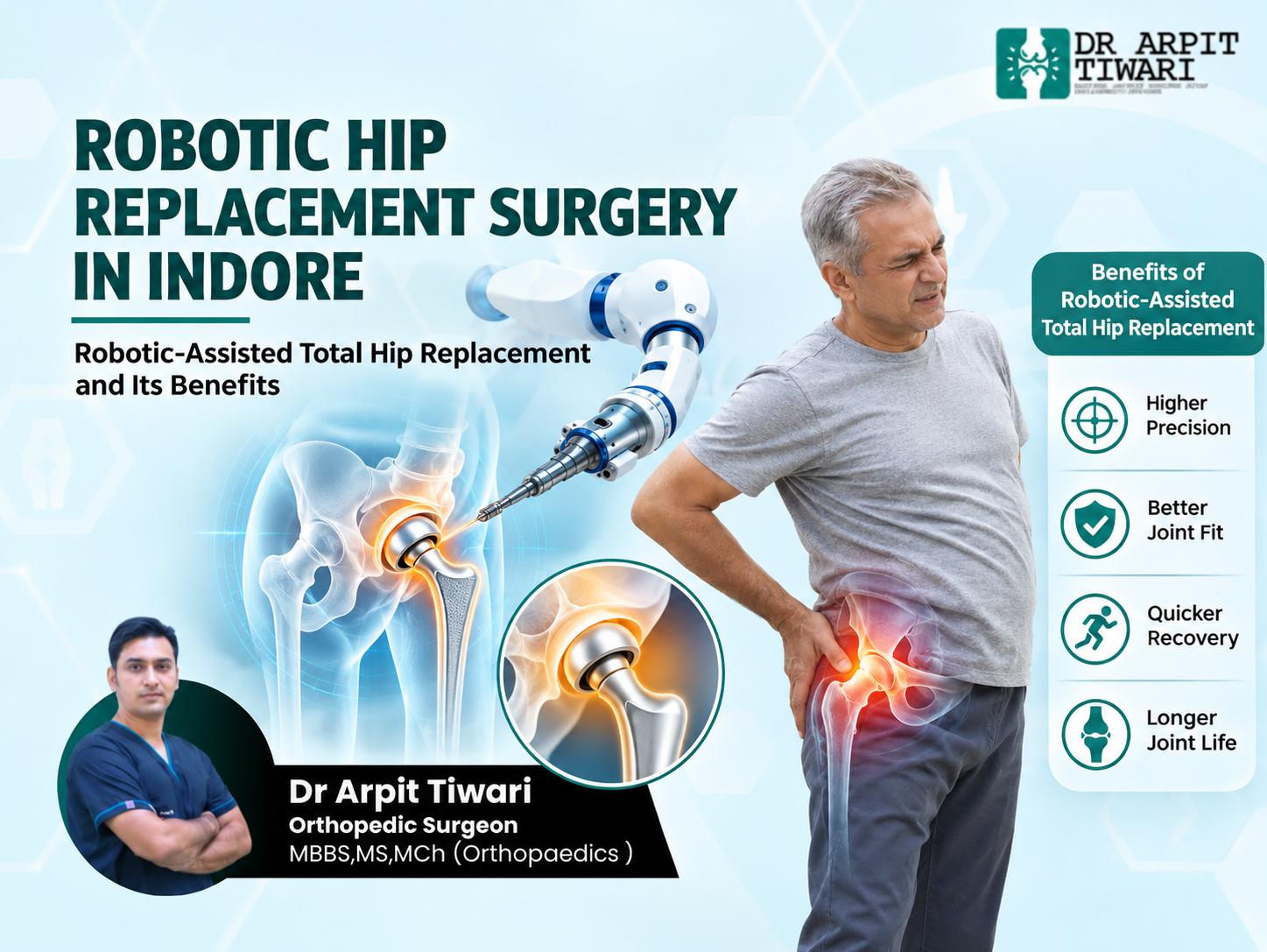
Hip pain can gradually affect almost every part of daily life. Activities such as walking, climbing stairs, getting out of bed, sitting comfortably, or putting on shoes may become difficult when the hip joint is severely damaged. In the early stages, medicines, physiotherapy, activity modification, and other non-surgical treatments may help manage symptoms. However, when the damage becomes advanced and pain continues to interfere with daily activities, hip replacement surgery may be considered.
Robotic Hip Replacement Surgery in Indore is a surgical approach that combines the surgeon’s experience with computer-assisted planning and robotic technology. It can help the surgeon understand the patient’s hip anatomy, plan implant positioning, and receive guidance during selected steps of the operation. The purpose is to support careful surgical planning and appropriate placement of the artificial joint.
Dr. Arpit Tiwari is a Consultant Joint Replacement and Trauma Surgeon associated with Jyoti Multi-Speciality Hospital, Vijay Nagar, Indore. His qualifications include MBBS, MS Orthopaedics, and MCh in Orthopaedics from the United Kingdom, along with fellowship training in hip and knee arthroplasty. Patients experiencing persistent hip pain can undergo an evaluation to understand the cause of their symptoms and whether joint replacement may be suitable.
What Is Robotic Hip Replacement Surgery?
Robotic hip replacement is a procedure in which damaged parts of the hip joint are replaced with artificial components, with assistance from computer-based planning and robotic technology.
The hip is a ball-and-socket joint. The rounded upper end of the thigh bone, called the femoral head, fits into a socket in the pelvis. Healthy cartilage covers these surfaces and allows them to move smoothly. When this cartilage becomes damaged due to arthritis, injury, or another condition, the bones may rub against each other. This can cause pain, stiffness, and reduced movement.
During a robotic-assisted procedure, the surgeon uses information from imaging and computer-based planning to understand the patient’s joint structure. Depending on the robotic system, the technology may provide guidance during bone preparation and implant positioning. It is important to understand that the robot does not independently perform the operation. The surgeon plans and controls the procedure, makes clinical decisions, and remains responsible for the surgery.
What Is Robotic-Assisted Total Hip Replacement?
Total hip replacement involves replacing both the damaged ball and socket portions of the hip joint with artificial components. The damaged femoral head is removed and replaced with an artificial ball attached to a stem. The damaged socket is prepared to receive an artificial cup, which contains a liner that allows the new joint to move.
In robotic-assisted procedures, computer-based planning can help the surgeon assess the patient’s anatomy and plan the size and position of the implant components. Depending on the system, robotic guidance may also assist during selected surgical steps.
The main purpose of the procedure is to reduce pain caused by severe joint damage and improve the patient’s ability to move. The suitability of this approach depends on the patient’s condition, the surgeon’s assessment, and the technology available.
Why Is Robotic Hip Replacement Becoming an Important Treatment Option?
Every patient’s hip structure is different. The shape of the pelvis, bone quality, joint damage, and alignment can influence how a replacement procedure is planned.
Robotic-assisted technology provides additional information that may help the surgeon prepare a surgical plan according to the patient’s anatomy. It may also offer guidance during selected stages of the operation.
1. Detailed Pre-Surgical Planning
Imaging and computer-assisted planning can help the surgeon understand the shape and structure of the hip joint before surgery. This information may assist in selecting suitable implant sizes and planning their position.
2. Assistance With Implant Positioning
The position of artificial components is an important part of hip replacement. Robotic guidance may help the surgeon work according to the planned measurements and assess component positioning during selected steps.
3. Assessment of Hip Alignment
The alignment of the hip components can influence joint movement and stability. Computer-assisted technology may provide measurements that help the surgeon assess alignment during the procedure.
4. Planning According to Individual Anatomy
Some patients have differences in bone shape, joint structure, or previous injury-related changes. Computer-assisted planning can help the surgeon consider these differences while preparing the surgical plan.
5. Guidance During Selected Surgical Steps
Depending on the robotic system, the technology may provide real-time information or controlled guidance during parts of the operation. The surgeon uses this information while making decisions throughout the procedure.
Robotic assistance does not guarantee better results for every patient. The choice between robotic-assisted and conventional surgery depends on the patient’s condition, the surgeon’s assessment, and the technology available.
Who May Need Hip Replacement Surgery?
Hip replacement may be considered when damage to the joint causes persistent pain, stiffness, and difficulty with everyday movement. The decision is based on symptoms, physical examination, imaging reports, general health, and response to previous treatment.
A patient may need an orthopaedic evaluation if they experience:
- Persistent pain in the hip or groin area
- Pain while standing or walking
- Difficulty climbing stairs
- Stiffness after sitting or resting
- Reduced movement of the hip
- Difficulty putting on socks or shoes
- Pain while getting in or out of a chair
- Discomfort that interrupts sleep
- Difficulty performing routine household or work activities
- Limited improvement with non-surgical treatment
Not everyone with hip pain needs surgery. An Orthopedic surgeon in Indore can assess the cause of the symptoms and explain whether medicines, physiotherapy, other treatments, or joint replacement may be appropriate.
Common Conditions That May Lead to Total Hip Replacement
Several medical conditions can damage the hip joint over time. The type and severity of damage help determine whether replacement surgery is required.
Osteoarthritis of the Hip
Osteoarthritis is a condition in which the protective cartilage covering the joint gradually wears down. As the cartilage becomes thinner, movement may become painful and stiff. In advanced cases, hip replacement may be considered when symptoms significantly affect daily life.
Rheumatoid Arthritis
Rheumatoid arthritis is an autoimmune condition that can cause inflammation inside joints. Long-term inflammation may damage the cartilage and bone of the hip, resulting in pain and reduced movement.
Avascular Necrosis
Avascular necrosis occurs when the blood supply to a part of the bone is reduced. This can damage bone tissue and may cause the femoral head to lose its normal shape. If the damage becomes severe, hip replacement may be recommended.
Hip Fractures and Previous Injuries
Some serious fractures or injuries can damage the hip joint. In certain cases, the joint may not recover its normal structure or function, and replacement surgery may be considered.
Hip Joint Deformity
Some people have structural differences in the hip joint from birth or develop deformities following injury or disease. If these problems cause severe joint damage and pain, surgical treatment may be evaluated.
Robotic Hip Replacement Surgery in Indore
Patients considering Robotic Hip Replacement Surgery in Indore should first undergo a detailed assessment of their hip condition. The surgeon reviews the patient’s symptoms, medical history, physical movement, previous treatments, and diagnostic reports.
X-rays and, when required, additional imaging may be advised to understand the condition of the joint and plan the procedure. The surgeon also considers the patient’s overall health, bone quality, activity level, and expectations from treatment.
During the consultation, patients can discuss whether total hip replacement is necessary and whether robotic assistance is suitable for their case. The treatment plan should be based on medical requirements rather than the technology alone.
Robotic Hip Replacement Surgery in Vijay Nagar, Indore
For patients experiencing ongoing hip pain, an evaluation can help identify whether the problem is related to arthritis, injury, or another joint condition. Robotic Hip Replacement Surgery in Vijay Nagar, Indore may be discussed when severe hip damage requires replacement and a robotic-assisted approach is considered appropriate.
Dr. Arpit Tiwari is associated with Jyoti Multi-Speciality Hospital in Vijay Nagar, Indore. During an assessment, the doctor reviews the patient’s mobility, pain pattern, medical history, and imaging reports before explaining suitable treatment options.
Patients should understand the expected benefits, limitations, possible risks, implant options, and recovery requirements before making a surgical decision.
Robotic Hip Replacement in Scheme No. 54, Indore
Patients living around Scheme No. 54 who experience persistent hip pain may require an orthopaedic evaluation, especially when walking, sitting, or climbing stairs becomes difficult. Robotic Hip Replacement in Scheme No. 54, Indore is a treatment option to discuss when the hip joint is severely damaged and replacement surgery is being considered.
Jyoti Multi-Speciality Hospital is located in Vijay Nagar, Indore. Patients can discuss their symptoms and reports with the treating surgeon to understand whether non-surgical treatment or hip replacement is suitable.
Potential Benefits of Robotic-Assisted Hip Replacement
Robotic-assisted technology may support different aspects of hip replacement planning and surgery. Its usefulness depends on the patient’s condition and the specific system being used.
Potential benefits may include:
- Individualised planning: Computer-assisted planning can help the surgeon consider the patient’s unique hip anatomy.
- Implant positioning guidance: Robotic technology may assist with planned measurements and component positioning.
- Alignment assessment: The system can provide information to help assess the alignment of the artificial joint.
- Surgical guidance: Selected steps may be supported by real-time information or robotic instruments.
- Pre-operative preparation: Detailed planning can help the surgical team prepare for the procedure.
However, robotic-assisted surgery also has limitations. Some systems may require additional imaging, and the procedure may involve additional planning time or cost. The technology does not remove the usual risks of surgery or guarantee a particular outcome.
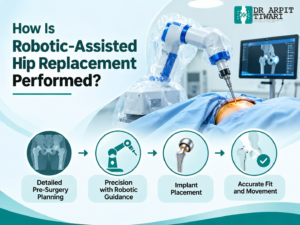
How Is Robotic-Assisted Hip Replacement Performed?
The procedure involves several stages. The exact steps may differ according to the patient’s anatomy, the implant selected, and the robotic system being used.
1. Initial Consultation and Examination
The surgeon reviews the patient’s symptoms, medical history, previous treatment, and ability to perform daily activities. A physical examination helps assess hip movement, pain, and overall mobility.
2. Imaging and Surgical Planning
X-rays and other imaging tests may be recommended. Depending on the system and surgical plan, a CT scan may also be required. The information helps the surgeon understand the joint structure and plan implant positioning.
3. Anaesthesia and Preparation
The patient is prepared for surgery, and the anaesthesia team decides the appropriate type of anaesthesia based on medical requirements. The surgical area is cleaned and prepared under standard operating-room procedures.
4. Accessing the Hip Joint
The surgeon reaches the hip joint through the selected surgical approach. The damaged femoral head is removed, and the socket is prepared for the artificial component.
5. Robotic-Assisted Guidance
The robotic system provides guidance according to the surgical plan. Depending on the technology, it may assist with measurements, bone preparation, and implant positioning. The surgeon remains in control and performs the required surgical steps.
6. Placement of Artificial Components
The artificial socket, liner, stem, and ball components are placed as required. The surgeon checks the joint’s movement, stability, and component position before completing the procedure.
7. Completion and Post-Surgery Monitoring
After the procedure, the surgical area is closed and the patient is shifted for monitoring. The care team observes recovery and begins mobilisation according to the surgeon’s instructions.
Hip Replacement Surgery in Mahalaxmi Nagar, Indore
People living in Mahalaxmi Nagar may experience hip discomfort due to arthritis, previous injuries, or age-related joint changes. Hip Replacement Surgery in Mahalaxmi Nagar, Indore may be considered when the joint is severely damaged and pain continues to affect walking, sleep, and everyday activities.
A proper examination helps determine whether the symptoms are coming from the hip joint or another part of the body, such as the lower back. The surgeon can then explain the available treatment options and whether replacement surgery is required.
Robotic Hip Replacement in Nipania, Indore
Persistent hip pain can affect mobility and make even short walks uncomfortable. Patients considering Robotic Hip Replacement in Nipania, Indore should understand that surgery is generally recommended only when joint damage is significant and other suitable treatments have not provided enough relief.
An orthopaedic evaluation helps identify the extent of joint damage and whether robotic-assisted surgery may be appropriate. The patient’s general health, bone condition, activity level, and rehabilitation needs are also considered before deciding on treatment.
Recovery After Total Hip Replacement
Recovery is an important part of hip replacement treatment. The time required varies according to the patient’s age, general health, muscle strength, bone condition, surgical approach, and rehabilitation progress.
First Few Days After Surgery
The patient is monitored after surgery. Depending on the surgeon’s instructions and overall condition, standing and walking may begin with assistance. A walker or other support may be used initially.
The medical team also provides guidance about wound care, medicines, movement, and precautions.
First Two to Six Weeks
During this stage, patients gradually work on walking, balance, and muscle strength. Physiotherapy helps improve movement and supports the return to routine activities.
Patients should follow the surgeon’s instructions about weight-bearing, exercises, sleeping positions, and daily movement.
Around Three Months and Beyond
Many patients continue to improve their strength, confidence, and walking ability over the following months. The pace of recovery differs from person to person. Some activities may be resumed gradually, depending on healing and medical advice.
Regular follow-up helps the surgeon assess recovery and identify any concerns.
Life After Hip Replacement Surgery
The main goal of hip replacement is to reduce pain caused by severe joint damage and improve the ability to move. Many suitable patients find everyday activities easier after recovery, although the amount of improvement varies. After rehabilitation, patients may gradually return to activities such as walking, sitting comfortably, climbing stairs, and performing household tasks. Low-impact activities may be encouraged when approved by the treating team.
It is important to maintain a healthy activity level, follow exercise instructions, attend follow-up appointments, and avoid activities that may place unnecessary stress on the artificial joint.
Hip Replacement Surgery near Satya Sai Square, Indore
Patients living near Satya Sai Square may seek an evaluation when hip pain begins affecting their walking, work, or routine activities. Hip Replacement Surgery near Satya Sai Square, Indore may be considered when examination and imaging show advanced joint damage that is not responding adequately to non-surgical treatment.
The treating surgeon can explain whether total hip replacement is required, which surgical approach may be appropriate, and whether robotic assistance is suitable. A detailed discussion before surgery helps patients understand the treatment process and recovery expectations.
Why Choose Dr. Arpit Tiwari for Hip Replacement?
Choosing a surgeon for hip replacement involves more than selecting a particular surgical technology. The surgeon’s qualifications, experience in joint replacement, understanding of hip anatomy, treatment planning, and post-operative care are important considerations.
Dr. Arpit Tiwari is a Consultant Joint Replacement and Trauma Surgeon associated with Jyoti Multi-Speciality Hospital, Vijay Nagar, Indore. His professional qualifications include:
- MBBS
- MS Orthopaedics
- MCh in Orthopaedics from the United Kingdom
- Fellowship training in Hip and Knee Arthroplasty
- Fellowship training in Joint Replacement Surgery
His orthopaedic practice includes joint replacement, reconstructive procedures, and trauma-related care. Patients looking for an Orthopedic surgeon in Indore can discuss their hip pain, mobility concerns, and treatment options during a clinical evaluation.
The decision to undergo surgery is individual. A proper assessment helps determine whether robotic-assisted or conventional hip replacement is more suitable.
Robotic Orthopedic Surgery in Indore: What Should Patients Understand?
Robotic Orthopedic Surgery in Indore refers to orthopaedic procedures in which computer-assisted robotic systems support the surgeon during selected stages of treatment. These systems may be used in certain joint replacement procedures, including hip and knee replacement.
Robotic technology is not a replacement for the surgeon’s experience or clinical judgement. The surgeon selects the procedure, plans the operation, and makes decisions during surgery. Patients should ask which robotic system is being used, whether additional scans are required, what benefits are expected in their specific case, and how the cost compares with conventional surgery. These discussions help patients make an informed choice.
How to Prepare for Hip Replacement Surgery
Preparing for surgery can help patients understand the process and organise their recovery. The surgeon and hospital team provide instructions based on the patient’s medical condition.
Some general preparation steps may include:
- Share details of existing medical conditions and previous surgeries.
- Inform the doctor about all medicines and supplements being taken.
- Complete the blood tests, imaging, and other investigations advised.
- Discuss anaesthesia and any medical concerns with the care team.
- Arrange help at home during the initial recovery period.
- Prepare a safe walking space and reduce obstacles that may cause falls.
- Understand the physiotherapy plan and post-surgery precautions.
Patients should not stop or change prescribed medicines without instructions from their treating doctor.
Is Robotic Hip Replacement Safe?
Robotic-assisted hip replacement is used as a surgical approach in selected patients. Like conventional hip replacement, it has potential benefits as well as risks. Possible complications may include infection, blood clots, bleeding, dislocation, fracture, nerve or blood vessel injury, differences in leg length, implant-related problems, and complications related to anaesthesia.
Some robotic systems may require additional imaging or the placement of tracking pins, which can have their own risks. The surgeon explains the relevant risks according to the patient’s condition and the technology being used.
A detailed pre-operative assessment, appropriate surgical planning, and post-operative care are important parts of treatment. Robotic assistance does not guarantee a complication-free procedure or a specific result.
Frequently Asked Questions – Robotic Hip Replacement Surgery in Indore
1. What is Robotic Hip Replacement Surgery in Indore?
Robotic Hip Replacement Surgery in Indore is a hip replacement procedure in which computer-assisted robotic technology helps the surgeon plan and guide selected steps of the operation. The damaged joint surfaces are replaced with artificial components, and the surgeon remains in control throughout the procedure.
2. Who may be suitable for robotic-assisted hip replacement?
Patients with severe hip arthritis, avascular necrosis, certain fractures, or other forms of advanced joint damage may be considered. The decision depends on pain, mobility, imaging findings, general health, and response to previous treatment. A surgeon experienced in robotic-assisted joint replacement can assess whether this approach is suitable for an individual patient.
3. What is the difference between robotic hip replacement and conventional hip replacement?
Both procedures aim to replace damaged parts of the hip joint with artificial components. Robotic-assisted surgery uses computer-based planning and robotic guidance during selected steps. Conventional surgery uses standard surgical instruments and techniques. The appropriate method depends on the patient’s anatomy, the surgeon’s assessment, and available technology.
4. Does the robot perform the entire hip replacement operation?
No. The robot does not independently perform the operation. The surgeon plans and controls the procedure, uses the robotic system for assistance where appropriate, and makes all important clinical decisions during surgery.
5. What are the benefits of Robotic Hip Replacement Surgery in Indore?
Robotic assistance may support personalised surgical planning, implant positioning, alignment assessment, and guidance during selected steps. The benefits depend on the patient’s condition and the robotic system used. It does not guarantee a particular result for every patient.
6. How long does recovery take after total hip replacement?
Recovery varies from patient to patient. Walking may begin with assistance soon after surgery when the medical team considers it appropriate. Strength, balance, and mobility improve gradually through rehabilitation. The surgeon and physiotherapist guide the patient on returning to routine activities.
7. How long can an artificial hip joint last?
An artificial hip joint can function for many years, but its lifespan varies according to implant type, activity level, body weight, health, and other factors. Regular follow-up and following medical guidance can help monitor the condition of the joint replacement.
8. How do I choose an Orthopedic surgeon in Indore for hip replacement?
Consider the surgeon’s qualifications, experience in joint replacement, approach to treatment planning, hospital facilities, and rehabilitation support. It is also important to discuss the available surgical options, possible risks, implant choices, and expected recovery before making a decision.
9. Where can I learn about Robotic-Assisted Hip Replacement in Indore?
Patients can discuss Robotic-Assisted Hip Replacement in Indore with their treating orthopaedic surgeon. An evaluation of symptoms, medical history, and imaging reports helps determine whether robotic-assisted surgery, conventional replacement, or another treatment may be appropriate.
Conclusion – Robotic Hip Replacement Surgery in Indore
Severe hip joint damage can affect walking, sleep, work, and everyday independence. When non-surgical treatments do not provide sufficient relief, total hip replacement may help suitable patients reduce joint-related pain and improve movement.
Robotic Hip Replacement Surgery in Indore combines surgical expertise with computer-assisted planning and robotic guidance during selected steps of the procedure. It may support individualised planning and implant positioning, but the right treatment depends on the patient’s joint condition, general health, and clinical assessment.
Dr. Arpit Tiwari at Jyoti Multi-Speciality Hospital, Vijay Nagar, Indore, provides evaluation for hip and joint replacement conditions. A detailed consultation can help patients understand their diagnosis, available surgical options, expected recovery, and whether robotic-assisted hip replacement is suitable for them.