Knee pain can gradually make everyday life difficult. Walking, climbing stairs, getting up from a chair, travelling, and even sleeping can become uncomfortable when the knee joint is badly damaged. While medicines and physiotherapy may help in the earlier stages, advanced arthritis or severe joint damage may eventually require knee replacement.
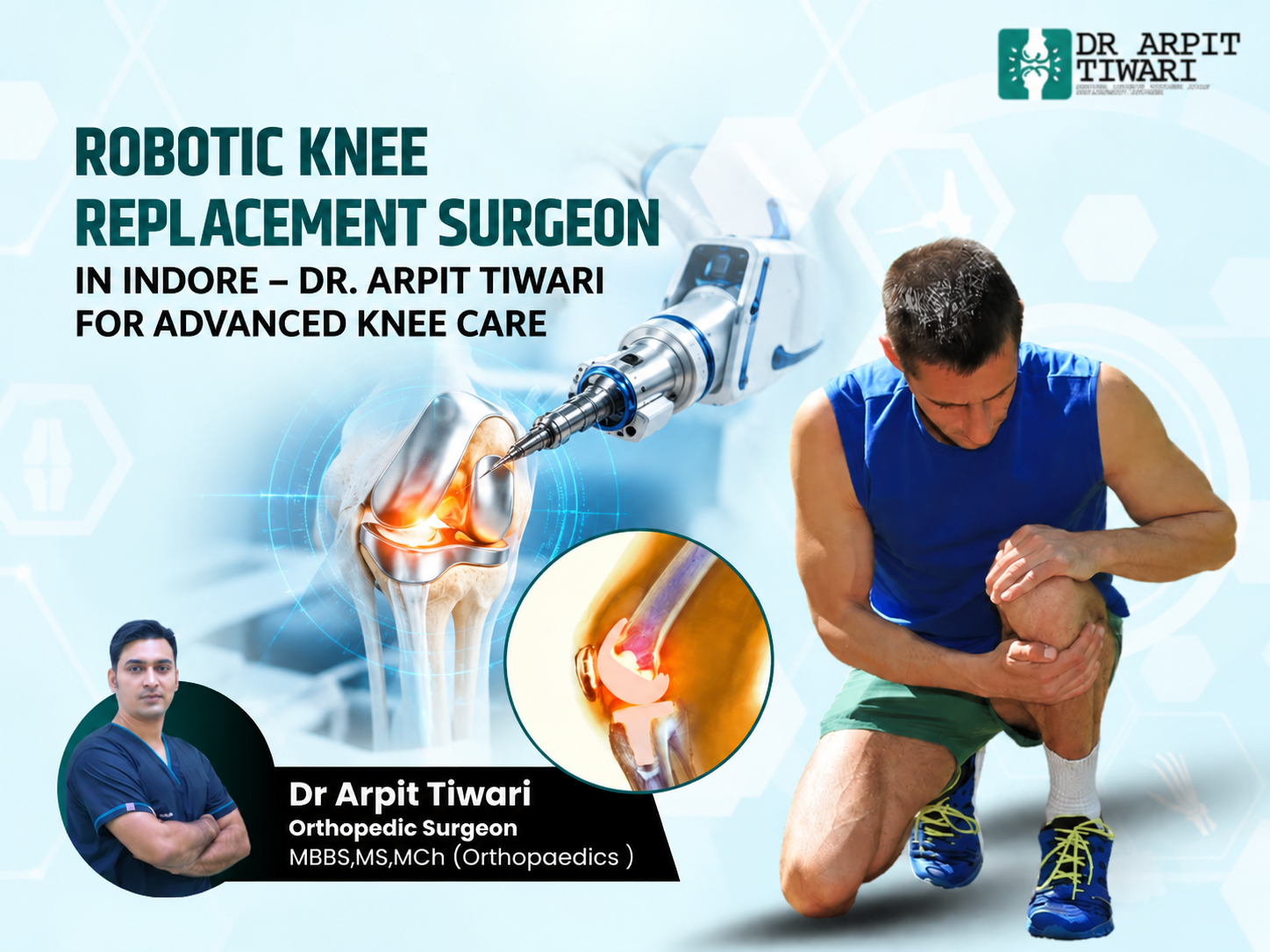
For patients who need joint replacement, Robotic Knee Replacement Surgeon in Indore is a search that is becoming increasingly common. Robotic-assisted technology can help the surgeon with detailed planning and accurate positioning of the knee implant during replacement surgery.
Dr. Arpit Tiwari, an experienced Orthopedic and Joint Replacement Surgeon in Indore, specializes in knee replacement, hip replacement, arthroplasty, fracture management, and complex orthopedic trauma. He has more than 15 years of experience and has performed over 15,000 successful orthopedic surgeries.
Dr. Arpit Tiwari practices at Jyoti Multi-Speciality Hospital, Indore, where patients can receive evaluation and treatment for different knee and joint conditions.
His advanced training includes a Stryker Fellowship for Hip and Knee Arthroplasty at Primus Super Speciality Hospital, New Delhi, followed by an Arthroplasty Fellowship at Nanavati Super Speciality Hospital, Mumbai. He also completed his MCH Orthopaedics from Ninewells Hospital, University of Dundee, Scotland, UK.
This combination of experience and specialized joint replacement training helps him evaluate patients carefully and select the most appropriate treatment according to their individual condition.
What Is Robotic Knee Replacement?
Robotic knee replacement is a modern approach to knee replacement surgery in which robotic-assisted technology helps the surgeon plan and perform the procedure with greater precision.
It is important to understand that the robot does not independently perform the surgery. The surgeon remains responsible for every important decision and controls the surgical procedure.
Before surgery, detailed information about the patient’s knee is used to create a surgical plan. During the procedure, the technology helps the surgeon follow this plan and assess the position and alignment of the knee.
The basic goal remains the same as traditional knee replacement: damaged portions of the knee are removed and replaced with artificial components to reduce pain and improve movement.
For suitable patients, robotic assistance can provide additional precision during implant positioning and alignment.
Why Is Robotic Knee Replacement Becoming Popular?
Traditional knee replacement has been performed successfully for many years. However, modern technology has introduced additional tools that can support surgeons during complex joint replacement procedures.
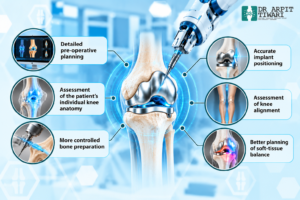
Robotic-assisted systems can help with:
- Detailed pre-operative planning
- Assessment of the patient’s individual knee anatomy
- More controlled bone preparation
- Accurate implant positioning
- Assessment of knee alignment
- Better planning of soft-tissue balance
The exact benefits depend on the patient’s condition, the technology being used, and the surgeon’s experience.
Therefore, robotic surgery should not be considered automatically better for every patient. A proper orthopedic evaluation is necessary to determine whether it is suitable.
Who May Need Robotic Knee Replacement?
Not every person with knee pain requires replacement surgery. Knee replacement is generally considered when the joint has significant damage and symptoms are affecting normal life.
Patients may be evaluated for knee replacement when they have:
- Advanced knee arthritis
- Persistent knee pain
- Severe stiffness
- Difficulty walking
- Difficulty climbing stairs
- Pain while standing or sitting
- Reduced knee movement
- Pain that affects sleep
- Difficulty performing routine activities
- Limited improvement with non-surgical treatment
Some patients may benefit from medicines, physiotherapy, weight management, activity modification, injections, or other non-surgical treatments.
However, when the joint damage becomes advanced and conservative treatment no longer provides sufficient relief, knee replacement may be considered.
An experienced Best Orthopedic Surgeon in Indore can examine the knee, review imaging, understand the patient’s symptoms, and explain whether replacement surgery is appropriate.
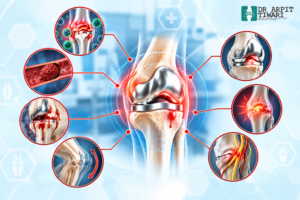
Common Conditions That May Lead to Knee Replacement
Osteoarthritis
Osteoarthritis is one of the most common causes of knee joint damage. The cartilage that normally provides smooth movement gradually wears away.
As the condition progresses, the bones may rub against each other. This can cause pain, stiffness, swelling, and reduced movement.
Rheumatoid Arthritis
Rheumatoid arthritis is an inflammatory condition that can damage the lining and structures of the knee joint.
Long-term inflammation may lead to pain, swelling, stiffness, and progressive joint damage.
Previous Knee Injury
A serious injury to the knee can sometimes lead to long-term changes inside the joint. Over time, this may contribute to post-traumatic arthritis and persistent pain.
Severe Joint Deformity
Advanced arthritis can sometimes change the natural alignment of the knee. In selected patients, replacement surgery may help restore a more functional alignment.
Robotic Knee Replacement in Indore
Patients searching for Robotic Knee Replacement in Scheme No 54, Indore may have several questions about whether robotic-assisted surgery is appropriate for their condition.
The answer depends on the actual health of the knee rather than location or age alone.
A detailed evaluation usually includes the patient’s symptoms, physical examination, X-rays, medical history, activity level, and overall health.
The surgeon can then explain whether non-surgical treatment, conventional knee replacement, or robotic-assisted knee replacement may be suitable.
Benefits of Robotic-Assisted Knee Replacement
Robotic-assisted technology is designed to support the surgeon during planning and execution of knee replacement.
Potential advantages may include:
- More detailed surgical planning
- Greater control during bone preparation
- Precise implant positioning
- Individualized planning according to knee anatomy
- Assistance with alignment
- Better assessment during the procedure
- Support for consistent surgical execution
However, the outcome of knee replacement does not depend on technology alone. The surgeon’s experience, patient selection, implant quality, surgical planning, rehabilitation, and post-operative care all play important roles.
Robotic Knee Replacement Surgeon in Vijay Nagar, Indore
Patients looking for a Robotic Knee Replacement Surgeon in Indore should consider more than just the availability of robotic technology.
The surgeon’s experience in knee replacement and understanding of complex joint conditions are equally important.
Dr. Arpit Tiwari has more than 15 years of orthopedic surgical experience and has performed over 15,000 successful orthopedic surgeries.
His specialized training in hip and knee arthroplasty includes a Stryker Fellowship at Primus Super Speciality Hospital, New Delhi, and an Arthroplasty Fellowship at Nanavati Super Speciality Hospital, Mumbai.
His practice includes knee replacement, hip replacement, arthroplasty, complex trauma, fracture management, and reconstructive orthopedic procedures.
How Is Robotic Knee Replacement Performed?
The procedure involves several stages. Understanding them can make the surgical journey easier for patients and their families.
Detailed Evaluation Before Surgery
The process begins with a consultation.
The doctor reviews the patient’s symptoms, medical history, previous treatments, walking pattern, knee movement, and level of pain.
X-rays and other investigations may be recommended to understand the condition of the knee.
The patient may also undergo routine health checks and anesthesia evaluation before surgery.
Creating the Surgical Plan
One of the important features of robotic-assisted knee replacement is detailed surgical planning.
Information about the patient’s knee anatomy is used to help create a customized plan.
The surgeon evaluates factors such as bone structure, alignment, and the condition of the joint.
This allows the surgical team to prepare for the procedure according to the patient’s individual anatomy.
During the Surgery
The patient receives appropriate anesthesia before surgery.
The surgeon accesses the damaged knee joint and removes the damaged portions of bone and cartilage.
Robotic-assisted technology helps the surgeon follow the planned measurements and positioning during the procedure.
The artificial knee components are then placed and checked for alignment and movement.
The surgeon remains in control throughout the procedure.
Closing the Surgical Area
Once the surgeon is satisfied with the positioning and stability of the artificial joint, the surgical area is closed.
The patient is then moved to the recovery area, where the medical team monitors the initial recovery.
Knee Replacement Surgeon in Scheme No 54, Indore – Why Surgical Planning Matters
Patients searching for a Knee Replacement Surgeon in Scheme No 54, Indore should understand that successful knee replacement involves more than simply replacing the damaged joint.
Proper planning helps the surgeon understand the patient’s knee anatomy and determine the most suitable surgical approach.
Factors such as age, bone quality, deformity, activity level, previous injuries, medical conditions, and expectations may influence the treatment plan.
This is why a detailed consultation is important before deciding on any type of knee replacement.
Recovery After Robotic Knee Replacement
Recovery begins soon after surgery. The exact timeline varies from one patient to another.
Age, overall health, muscle strength, type of surgery, pre-existing medical conditions, and commitment to rehabilitation can all influence recovery.
First Few Days
The initial days focus on pain control, monitoring, wound care, and safe movement.
Depending on the patient’s condition, a physiotherapist may help with:
- Getting out of bed
- Standing safely
- Walking with a walker
- Basic knee exercises
- Gentle movement of the joint
Some swelling and discomfort are common during the early recovery period.
First 2–6 Weeks
During the first several weeks, patients gradually become more comfortable with walking.
Regular physiotherapy helps improve:
- Knee movement
- Muscle strength
- Balance
- Walking ability
- Confidence while moving
Patients should not compare their recovery with someone else’s. Healing speed can be different for every individual.
Around Three Months
Many patients experience significant improvement in walking and daily activities during the first few months.
The knee may feel stronger, movement may become easier, and dependence on walking support may reduce.
However, the exact recovery timeline should always be discussed with the treating surgeon and physiotherapist.
Life After Robotic Knee Replacement
The main purpose of knee replacement is to reduce pain and improve the patient’s ability to perform everyday activities.
After successful recovery, patients may find activities such as walking, standing, sitting, climbing stairs, and travelling easier than before surgery.
Many patients also regain confidence because they no longer have to plan their entire day around knee pain.
However, an artificial joint still requires sensible use. Patients should follow medical advice regarding exercise, weight management, and high-impact activities.
Robotic Knee Replacement Doctor in Vijay Nagar, Indore
A patient looking for a Knee Replacement Doctor in Vijay Nagar, Indore should first understand the severity and cause of the knee problem.
Not every patient with arthritis needs robotic surgery.
The appropriate treatment may range from physiotherapy and medication to injections or surgery, depending on the condition.
A detailed orthopedic consultation helps determine the right treatment instead of choosing a procedure simply because it is technologically advanced.
Why Choose Dr. Arpit Tiwari for Knee Replacement?
Dr. Arpit Tiwari is an experienced Orthopedic and Joint Replacement Surgeon with more than 15 years of experience and over 15,000 successful orthopedic surgeries.
His professional training includes specialized education in joint replacement and arthroplasty.
He completed:
- Stryker Fellowship for Hip and Knee Arthroplasty – Primus Super Speciality Hospital, New Delhi
- Arthroplasty Fellowship – Nanavati Super Speciality Hospital, Mumbai
- MCH Orthopaedics – Ninewells Hospital, University of Dundee, Scotland, UK
- MS in Orthopaedics – Aurobindo Institute of Medical Sciences, Indore
He has also undergone advanced training and workshops related to hip and knee arthroplasty, computer-navigated joint replacement, trauma care, and other orthopedic procedures.
At Jyoti Multi-Speciality Hospital, Indore, he provides evaluation and treatment for knee pain, arthritis, joint replacement, fractures, trauma, and other orthopedic conditions.
For patients considering robotic-assisted treatment, the first step is a proper assessment to determine whether the technology is suitable for their specific knee condition.
How to Prepare for Knee Replacement Surgery
Preparing properly can make the recovery period easier.
Before surgery, patients should discuss their existing medical conditions and medicines with the medical team.
It is also useful to understand:
- What the surgery involves
- Expected hospital stay
- Physiotherapy requirements
- Walking support after surgery
- Medication instructions
- Follow-up schedule
- Activity restrictions
Maintaining a healthy weight and following the recommended exercises before surgery may also help some patients prepare physically for rehabilitation.
Tips for Recovery After Knee Replacement
Recovery requires patience and regular effort.
Patients should:
- Follow the physiotherapy program regularly.
- Perform exercises as instructed.
- Use walking support when advised.
- Take prescribed medicines correctly.
- Keep the surgical wound clean.
- Attend follow-up appointments.
- Increase activity gradually.
- Maintain a healthy body weight.
- Avoid high-impact activities until cleared by the doctor.
Patients should contact their medical team if they develop unusual symptoms such as increasing pain, fever, wound discharge, significant swelling, or sudden breathing difficulty.
Is Robotic Knee Replacement Safe?
Robotic-assisted knee replacement is a modern surgical approach, but it is still a major orthopedic procedure.
Like other forms of knee replacement, potential complications may include:
- Infection
- Blood clots
- Bleeding
- Stiffness
- Implant-related problems
- Persistent pain
- Nerve or blood vessel injury
The risk varies depending on the patient’s age, health, medical conditions, surgical complexity, and other factors.
Careful patient selection, proper surgical planning, experienced surgical care, and appropriate rehabilitation are important parts of a safe recovery.
Frequently Asked Questions – Robotic Knee Replacement in Indore
Who is a Robotic Knee Replacement Surgeon in Indore?
A Robotic Knee Replacement Surgeon in Indore is an orthopedic surgeon who performs selected knee replacement procedures with the support of robotic-assisted technology. The surgeon remains in control of the procedure, while the technology assists with surgical planning, alignment, bone preparation, and implant positioning. Dr. Arpit Tiwari has specialized training in hip and knee arthroplasty and extensive experience in joint replacement surgery.
Is robotic knee replacement better than traditional knee replacement?
Robotic-assisted surgery can provide additional planning and precision during selected knee replacement procedures. However, a Robotic Knee Replacement Surgeon in Indore will first evaluate the patient’s knee condition, anatomy, severity of arthritis, overall health, and treatment requirements before deciding whether robotic assistance is appropriate. It is not automatically the better option for every patient.
Who may need robotic knee replacement?
Patients with advanced arthritis, severe joint damage, persistent pain, significant stiffness, deformity, reduced knee movement, or difficulty performing daily activities may be evaluated for knee replacement. A Robotic Knee Replacement Surgeon in Indore can review the patient’s symptoms, examination findings, imaging, and previous treatment before recommending the most suitable surgical approach.
What are the benefits of robotic knee replacement?
Potential benefits of robotic-assisted knee replacement include detailed surgical planning, individualized assessment of knee anatomy, assistance with bone preparation, implant positioning, and alignment assessment. Consulting a Robotic Knee Replacement Surgeon in Indore can help patients understand whether these potential advantages are relevant to their specific knee condition.
How long does recovery take after robotic knee replacement?
Recovery varies from patient to patient. Many people gradually improve during the first few weeks, while knee strength, movement, balance, and confidence can continue improving over several months. Recovery also depends on age, overall health, muscle strength, surgical complexity, and participation in physiotherapy.
Can I walk after robotic knee replacement?
Patients are generally encouraged to begin movement and walking with appropriate support when medically suitable. A physiotherapist usually guides early walking, knee exercises, and rehabilitation according to the patient’s condition. The exact timeline for walking independently can vary depending on individual recovery.
How long can a knee replacement implant last?
Modern knee replacement implants can provide long-term function, although their longevity varies from patient to patient. Factors such as age, activity level, body weight, implant type, bone quality, overall health, and long-term care can influence implant performance.
Where can I consult for robotic knee replacement in Indore?
Patients can consult Dr. Arpit Tiwari at Jyoti Multi-Speciality Hospital, Indore, for evaluation of knee pain, arthritis, joint damage, and knee replacement requirements. He can assess the condition of the knee and explain whether robotic-assisted knee replacement, conventional replacement, or non-surgical treatment may be appropriate.
Conclusion – Robotic Knee Replacement in Indore
Severe knee arthritis can affect much more than walking. It can reduce independence, disturb sleep, limit travel, and make simple daily activities difficult.
Robotic-assisted knee replacement is a modern approach that can support detailed planning and precise execution in suitable patients. However, technology is only one part of successful joint replacement. Proper diagnosis, experienced surgical care, appropriate implant selection, and rehabilitation are equally important.
Dr. Arpit Tiwari brings more than 15 years of orthopedic experience and over 15,000 successful orthopedic surgeries, with specialized training in hip and knee arthroplasty and orthopedic trauma.
For patients searching for a Robotic Knee Replacement Surgeon in Indore, the right first step is a detailed orthopedic evaluation. At Jyoti Multi-Speciality Hospital, Indore, Dr. Arpit Tiwari can assess the condition of the knee and explain whether robotic-assisted knee replacement or another treatment option is appropriate.
The goal of treatment is not simply to perform surgery. It is to help the patient achieve better movement, reduce pain, and return to daily life with greater confidence.